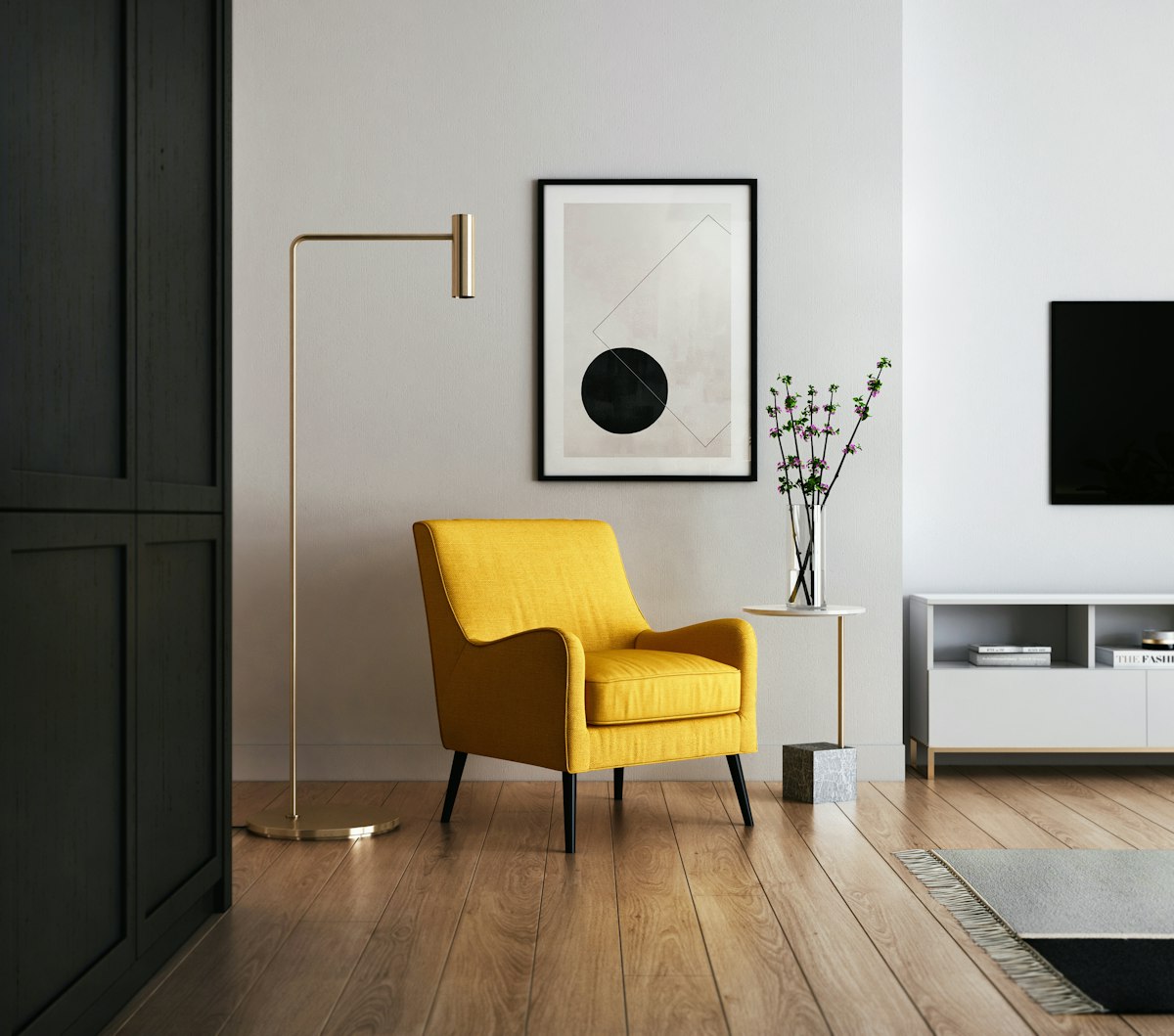
One ceiling fixture doing three jobs badly is the default living room. It
flattens the room, casts shadows from every seat, and forces a choice
between hospital-bright and cave-dark. Layered lighting fixes this without
an electrician — what it needs is a plan.
What each layer is for
Ambient is the base level that lets you walk through the room without
shins meeting furniture. In a 16-by-12-foot living room, aim for roughly
1,500–2,000 lumens total, spread across at least two sources so no corner
goes black. Task is light aimed at what your hands and eyes are doing:
reading, puzzles, needlework. It lives in floor and table lamps beside the
seats that need it, not in the ceiling. Accent is the layer everyone
skips and everyone notices when it's missing — a picture light, an uplight
behind a plant, a wash on a bookshelf. It gives the room depth after dark.
Start with the dark corners, not the ceiling
Walk the room at night and note where your eye snags: that's where a layer
is missing. A corner lamp at 800 lumens does more for a living room than a
new ceiling fixture, because corners are where light dies. A single
9-watt LED floor lamp in the far corner can make a whole space feel
finished before you touch anything overhead.
Warm bulbs, everywhere, no exceptions
Every bulb in the room should sit between 2200K and 2700K. Mixing a 3000K
floor lamp with 2700K table lamps reads as a mistake even to people who
can't name why. Put the dimmable bulbs on the ambient layer and set the
evening scene at about 60% — bright enough to find the remote, low enough
that faces stay soft.
Where the lamps actually go
- Reading seat: lamp bottom at shoulder height when seated, roughly
40–42 inches from the floor, with the shade's bottom edge below your
sightline so you never see the bulb.
- Sofa side: one lamp per sofa, minimum. A sofa with no light beside it
becomes the seat nobody takes after dinner.
- Media wall: bias lighting behind the screen at under 10% of screen
brightness. It cuts eye strain more than any TV setting.
- Switch logic: put each layer on its own switch or smart group. Three
scenes — full, evening, movie — cover 95% of how the room gets used.
Live with it a week before buying anything else
Live with the room through one full week of evenings before adding fixtures.
Note which layers you reach for and which you ignore. Most people find they
need more task light by the reading chair and far less ambient than the
ceiling fixture provides — which is exactly the argument for dimming the
overhead to nearly nothing and letting the lamps do the work.