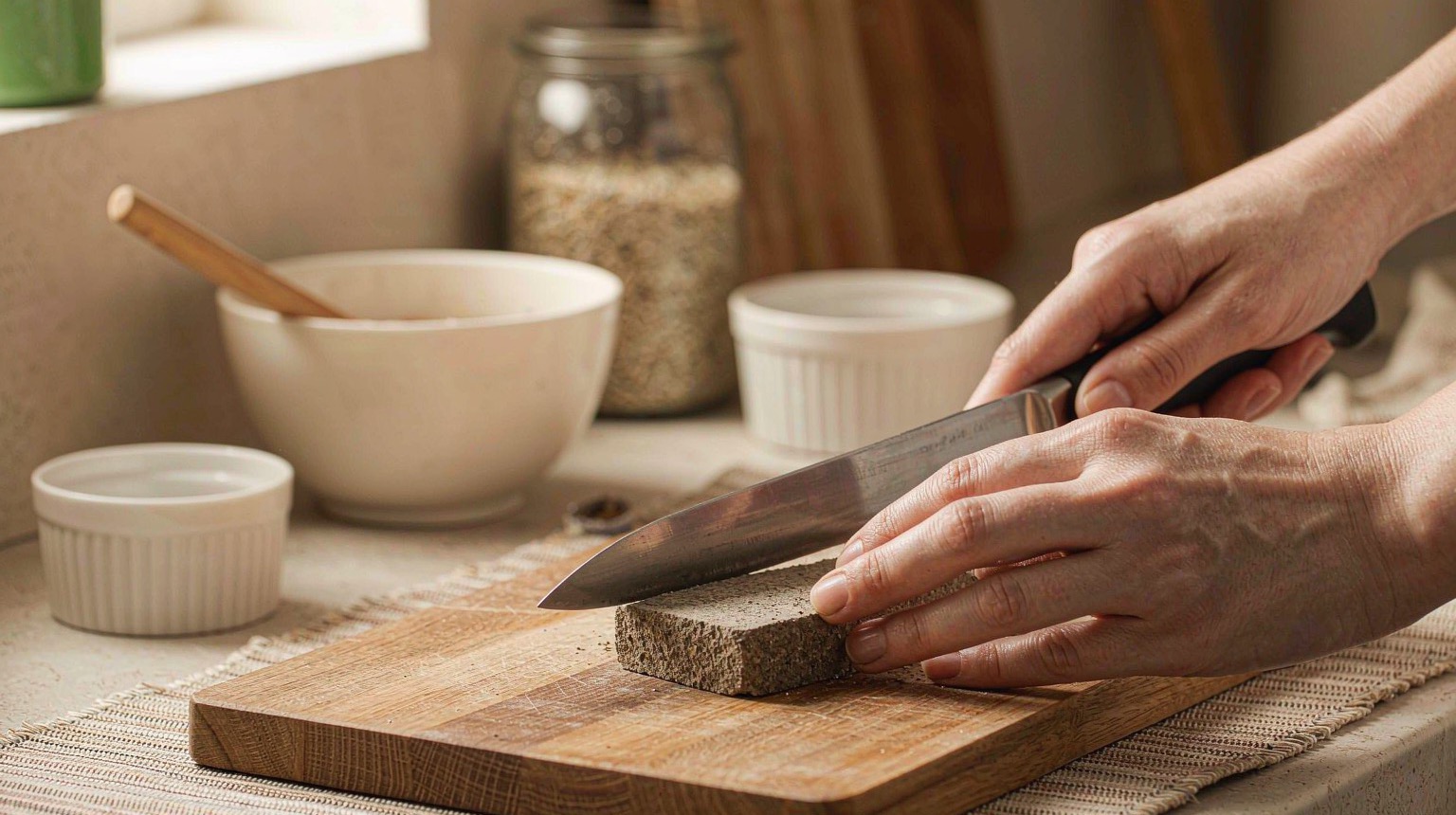
The sharpening method matters more than the knife. That's the one conclusion
that shows up everywhere it's been measured: Serious Eats' sharpener testing
found bigger differences between methods than between price brackets, and
sharpening communities say the same from years of edge maintenance. Pick the
right method and even a cheap knife performs; pick the wrong one and you're
slowly grinding your good knife away.
Honing vs. sharpening
Honing realigns the microscopic edge that folds over with use. It removes
almost no metal. Do it weekly on a rod and your knives stay sharper between
sharpenings.
Sharpening removes metal to create a new edge. A dull knife that's only
been honed is still dull — it just has a straighter dull edge. If your knife
slides on a tomato skin even after honing, it needs sharpening, not more rod
work.
A 1000-grit stone covers almost everything
A 1000-grit stone handles 90% of home sharpening. Skip the fancy 6000-grit
stone until you can hold a consistent 15–20° angle for a full pass — which
takes most people ten practice sessions, not ten minutes. Serious Eats'
editors lean on angle guides for the same reason.
The method that works: anchor the stone on a damp towel, use a binder clip on
the spine as an angle guide if you're new, and count strokes. Ten per side,
alternating, light pressure. The burr test tells you when you're done — drag
a thumb perpendicular (never along) the edge; you should feel a faint wire of
metal flip from side to side.
What the pull-through does well
A pull-through sharpener is genuinely good at one thing: restoring a working
edge on a cheap, soft steel knife in about ninety seconds, no technique
required. For an unpracticed hand, it will beat a first attempt on a
whetstone. The catch is documented in Serious Eats' instrumented testing —
one well-regarded pull-through removed a measurable two grams of steel over
its test rounds, and their verdict is blunt: these sharpeners remove far more
metal than necessary and leave a rougher, shorter-lived edge. Use it on a $40
knife, not on your grandmother's carbon steel.
The edge killers
- Glass and bamboo boards. Both are edge destroyers — bamboo's high
silica content is specifically flagged by Serious Eats as hard on blades.
End-grain wood or soft plastic boards only.
- The dishwasher. Detergent grit and rattling against other items round
the edge.
- Loose storage. A knife drawer is a sharpening reversal machine. Use a
block, sheaths, or a magnetic strip mounted correctly — blade-side down on
the strip, magnet pulling on the flat, not the edge.
Repair or retire
A $12 IKEA knife properly sharpened will outperform a $150 knife maintained
carelessly. But knives do die: if the blade is thinned near the bolster from
years of sharpening, or the tip is broken and reground twice, replacement is
honest.
The starter kit
Buy a 1000-grit stone ($25–35), a honing rod, and use wooden or plastic boards. Sharpen four times a year, hone weekly, and your knives will be
sharper than most restaurant knives. The whetstone takes ten sessions to
learn — but it's the only method that makes a knife shave hair, and once you
get there, the pull-through gadget goes in the donation box.